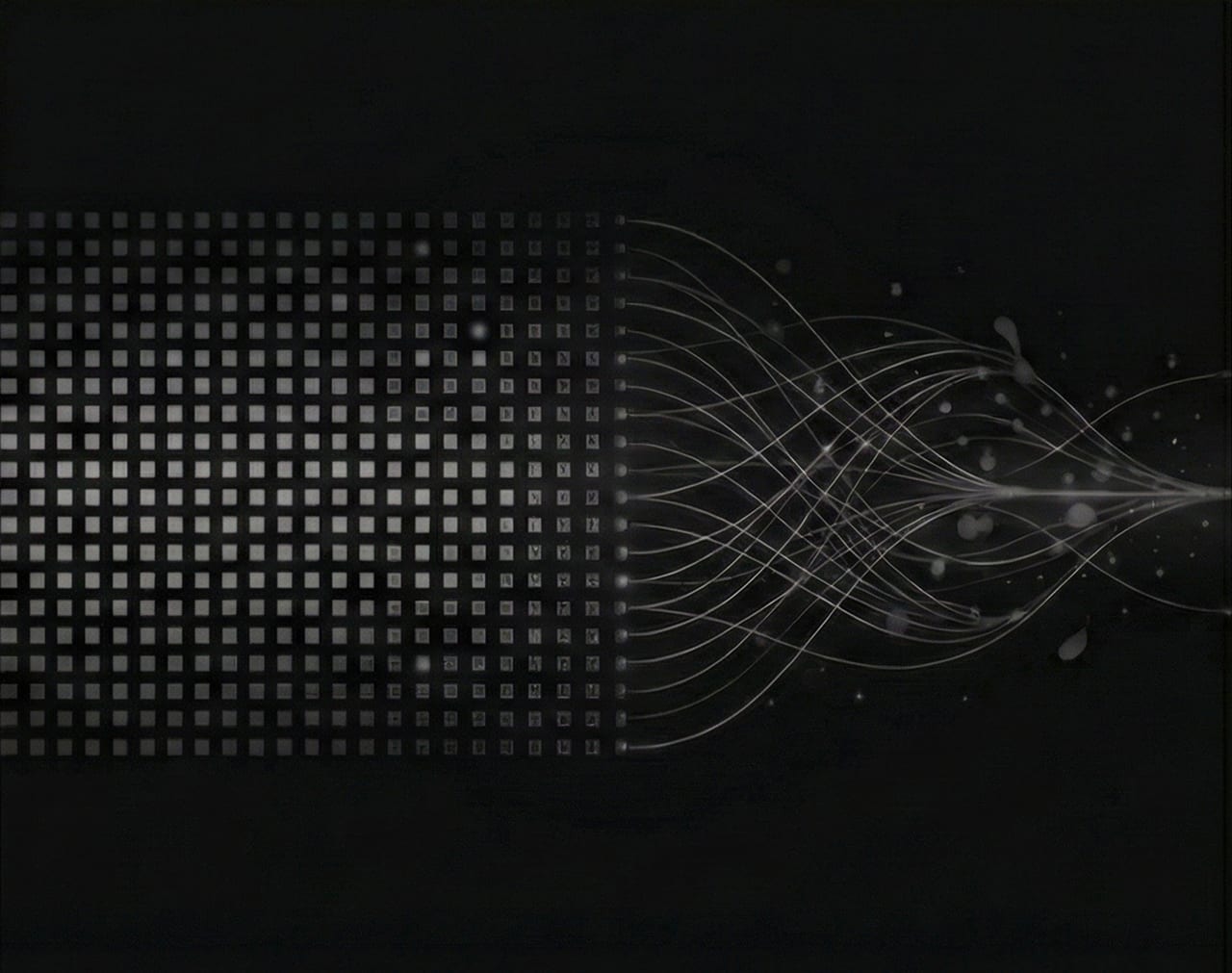
For decades, user interfaces have been designed the same way: static screens, fixed layouts, wireframes, and flows that look identical for every user.
But in today’s world, where people expect personalization, accessibility, and speed, static UI has reached its breaking point.
The next wave? AI-generated interfaces that adapt on the fly.
A Vision from 60 Years Ago
In 1968, Douglas Engelbart, an American engineer, inventor, and computer science pioneer, introduced a concept that would change how we think about human-computer interaction.
His philosophy of Augmented Human Intelligence was simple yet profound: computers should adapt to humans, not force humans to adapt to machines.
At the time, it was a visionary approach. Today, with the rise of AI, it’s becoming a reality.
From Fixed to Fluid
For years, product teams have been stuck in the paradigm of static design: every user, regardless of their context, gets the same interface.
Now imagine this instead:
- A senior opens an app and sees large buttons, simplified steps, and clear language.
- A teenager gets compact layouts, shortcuts, and fast navigation.
- A driver interacts hands-free through voice-first commands.
Same product. Different experience. Instantly adapted.
That’s the leap from fixed layouts to fluid, AI-generated interfaces.
What Changes for Teams
This shift doesn’t just transform the user experience. It reshapes how teams build products.
Instead of hardcoding endless screens, teams will define:
- Capabilities – what the product can do
- Policies – rules, safety measures, and constraints
- Components – modular, reusable design blocks
AI then assembles the right interface in real time.
The team sets the foundation; AI composes the experience.
The Upside
- Personalized by user & context
- Accessible by default
- Faster to ship (teams define functions, not endless variations)
- Continuously evolving as products improve dynamically
The Challenges
Of course, this future comes with hurdles:
- Consistency – ensuring users don’t feel lost
- Safety – preventing risky flows or mistakes
- Trust – making sure adaptive UIs help, not confuse
A New Role for Product & Design
This new design paradigm reshapes roles inside teams:
- Designers will focus on systems, principles, and components, not every pixel.
- Engineers will handle orchestration and safety at scale.
- Product Managers will define capabilities and outcomes, not screens.
The shift: from building screens → to building systems.
No Static UI
The future of design isn’t “no UI.”
It’s no static UI.
Interfaces will be dynamic, contextual, and AI-assembled.
It’s the natural continuation of Engelbart’s vision: technology bending to human needs, not the other way around.
Final Thought
This isn’t just a design trend. It’s a paradigm shift.
The real challenge, and opportunity, for teams today is to create the systems that make this future safe, human, and inspiring.
The big question is:
👉 Are we ready to design for a world where no two UIs are the same?