In Part 1, AI changed what you see.
In Part 2, it shaped what you believe.
Now comes the part nobody is ready for.
AI no longer just shapes the screen. It acts. Often while you're not even looking.
See, believe, act. Each step pulled AI deeper into your life, and further out of your sight.
This isn't a forecast. It's already happening, quietly, in your name.
The End of the Audience
For fifty years, we designed for attention. Hold the eye. Guide the click. Optimise the flow.
The agentic web breaks the one assumption underneath all of it: that the user is here.
Now you hand off a goal and walk away. "Book my trip home." "Sort my inbox." "Renew it before it expires." Every one of those is a small act of faith.
The defining condition of the user is no longer attention. It's absence.
Absent doesn't mean gone. The user is still in charge. They've just stopped watching.
From Attention to Authority
They left the doing. They kept the deciding.
Screens WERE our building blocks. The absent user NEEDS new ones:
- The interruption. When does something matter enough to pull a person back? You design an interruption budget, not a flow.
- Delegated authority. What the agent may do alone, for how long, and how you take it back. A kind of power of attorney.
- Reversibility. When software acts on its own, "easy to use" matters less than "safe to undo."
The series in one line: from designing screens → to designing systems → to designing what runs without us.
Confidence Is the Control Surface
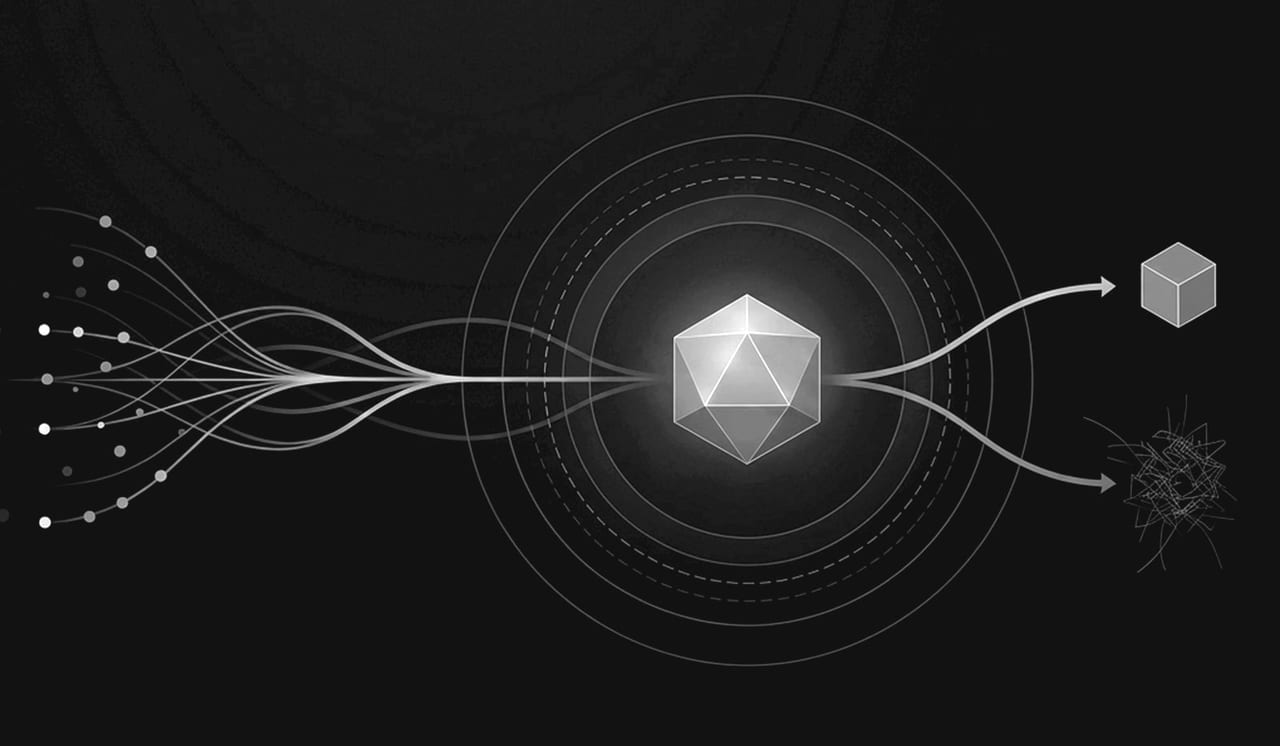
When the user is absent, one thing decides whether the agent acts or waits: how sure it is.
So doubt stops being something we display. It becomes the thing that governs everything.
An agent that knows when it doesn't know is safe to leave alone. One that doesn't is a danger the moment you look away.
We spent fifty years teaching interfaces to look certain. A button is a promise: press it, it happens.
Now we have to teach them something harder. To be honest about what they don't know.
Booking your usual seat? It just books it. The price suddenly tripled? It stops and asks.
The new dark pattern is the opposite: a machine that fakes confidence to slip past you, that says "I've got this" precisely when it doesn't.
The Vigilance Paradox
Aviation learned this the hard way. The better the autopilot, the less the pilot watches. The less they watch, the rustier they get. And when the rare failure finally comes, no one is ready.
Our agents inherit this exactly. The better they get, the less we supervise, and the worse we become at catching the one moment that matters.
The nightmare isn't a wrong agent. It's a confidently wrong one, acting in silence, while we've stopped watching.
Which is why calibration isn't a nice-to-have. It's the seatbelt.
Designers as Architects of Trust
Trust is a human thing before it is a technical one. Think about the people you actually rely on. They were never the ones who were always right. They were the ones honest enough to say "I'm not sure" before it mattered.
That is the bar for software now. Our job is to design the kind of trust that lets a person hand over the wheel, walk away, and still feel in control.
Sixty years ago, Engelbart said computers should adapt to humans, not the other way around. This is the next step: a machine that does the work, then knows when to stop and let you decide.
Not a smarter screen. Something you can trust the way you trust a person: not because it never gets it wrong, but because it tells you when it might.
Final Thought
Adaptive design made technology personal. Honest design made it fair. Self-aware design makes it safe to trust.
The next leap in UI isn't a smarter machine. It's one bold enough to act on its own, and self-aware enough to know when it shouldn't.
The real test of intelligence was never knowing the answer. It's knowing when to ask.
👉 Are we ready to build software smart enough to admit when it isn't?